
Day 01 / 63 · Network foundations
Network Devices
Study notes based primarily on Jeremy’s IT Lab CCNA learning videos. Credit to Jeremy’s IT Lab for the source lessons and diagrams.
Network Devices
Download original PDF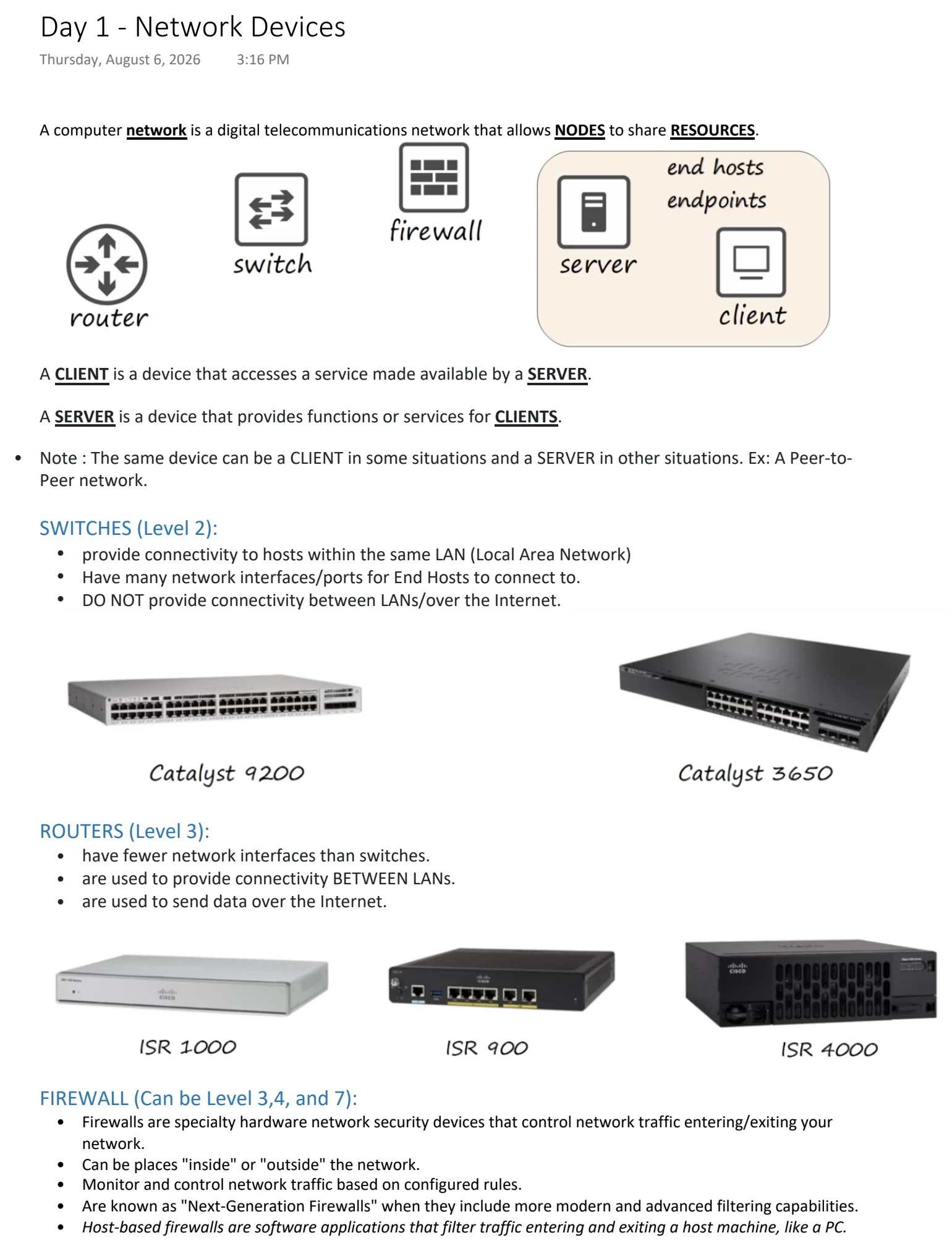
Text view — Network Devices
Extracted from the original export. Diagrams and some formatting appear in the notes above.
Day 1 - Network Devices
Thursday, August 6, 2026 3:16 PM
A computer network is a digital telecommunications network that allows NODES to share RESOURCES.
A CLIENT is a device that accesses a service made available by a SERVER.
A SERVER is a device that provides functions or services for CLIENTS.
• Note : The same device can be a CLIENT in some situations and a SERVER in other situations. Ex: A Peer-to-
Peer network.
SWITCHES (Level 2):
• provide connectivity to hosts within the same LAN (Local Area Network)
• Have many network interfaces/ports for End Hosts to connect to.
• DO NOT provide connectivity between LANs/over the Internet.
ROUTERS (Level 3):
• have fewer network interfaces than switches.
• are used to provide connectivity BETWEEN LANs.
• are used to send data over the Internet.
FIREWALL (Can be Level 3,4, and 7):
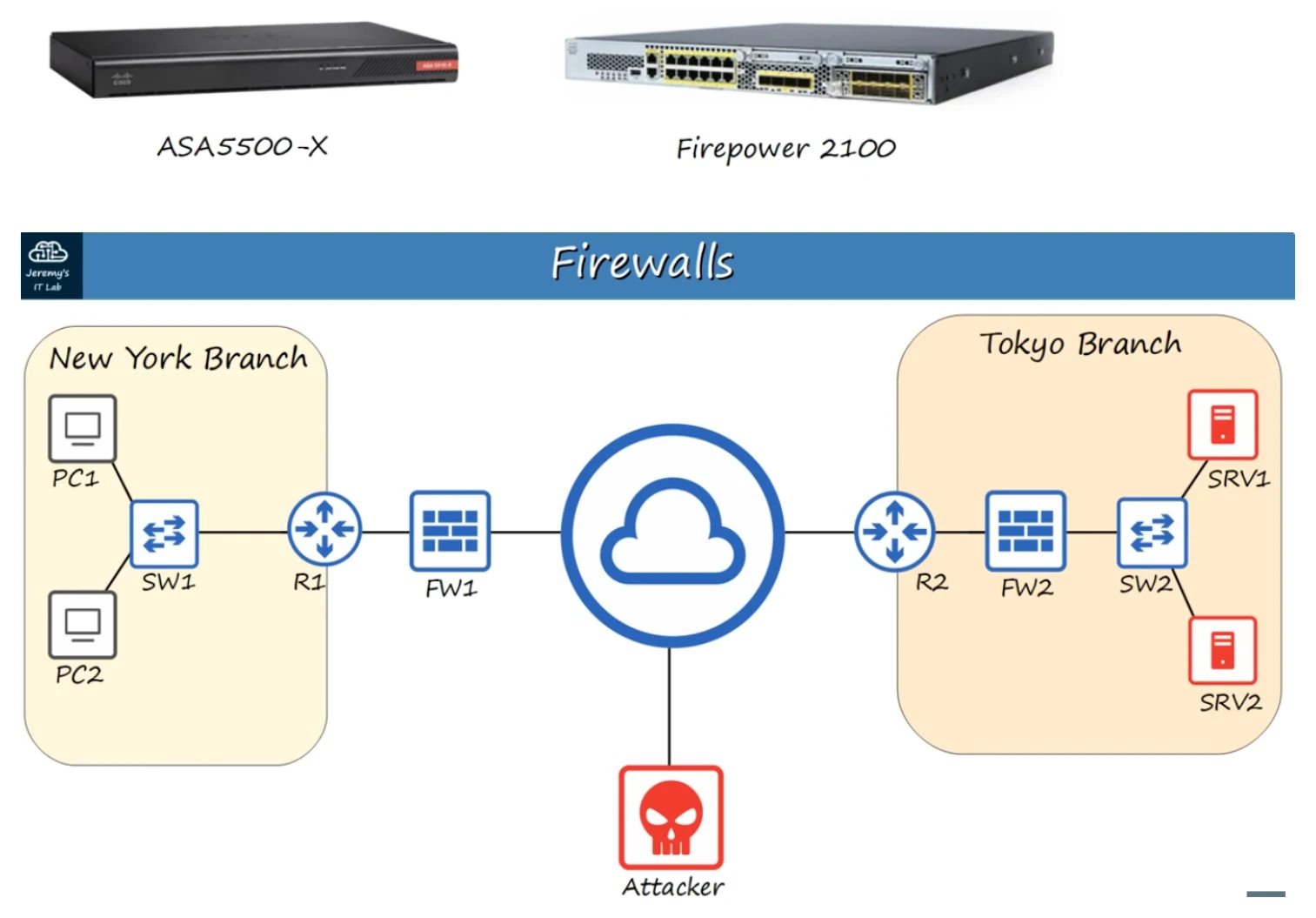
• Firewalls are specialty hardware network security devices that control network traffic entering/exiting your
network.
• Can be places "inside" or "outside" the network.
• Monitor and control network traffic based on configured rules.
• Are known as "Next-Generation Firewalls" when they include more modern and advanced filtering capabilities.
• Host-based firewalls are software applications that filter traffic entering and exiting a host machine, like a PC.

Day 1 - Network Devices
Thursday, August 6, 2026 3:16 PM
A computer network is a digital telecommunications network that allows NODES to share RESOURCES.
A CLIENT is a device that accesses a service made available by a SERVER.
A SERVER is a device that provides functions or services for CLIENTS.
• Note : The same device can be a CLIENT in some situations and a SERVER in other situations. Ex: A Peer-to-
Peer network.
SWITCHES (Level 2):
• provide connectivity to hosts within the same LAN (Local Area Network)
• Have many network interfaces/ports for End Hosts to connect to.
• DO NOT provide connectivity between LANs/over the Internet.
ROUTERS (Level 3):
• have fewer network interfaces than switches.
• are used to provide connectivity BETWEEN LANs.
• are used to send data over the Internet.
FIREWALL (Can be Level 3,4, and 7):
• Firewalls are specialty hardware network security devices that control network traffic entering/exiting your
network.
• Can be places "inside" or "outside" the network.
• Monitor and control network traffic based on configured rules.
• Are known as "Next-Generation Firewalls" when they include more modern and advanced filtering capabilities.
• Host-based firewalls are software applications that filter traffic entering and exiting a host machine, like a PC.